
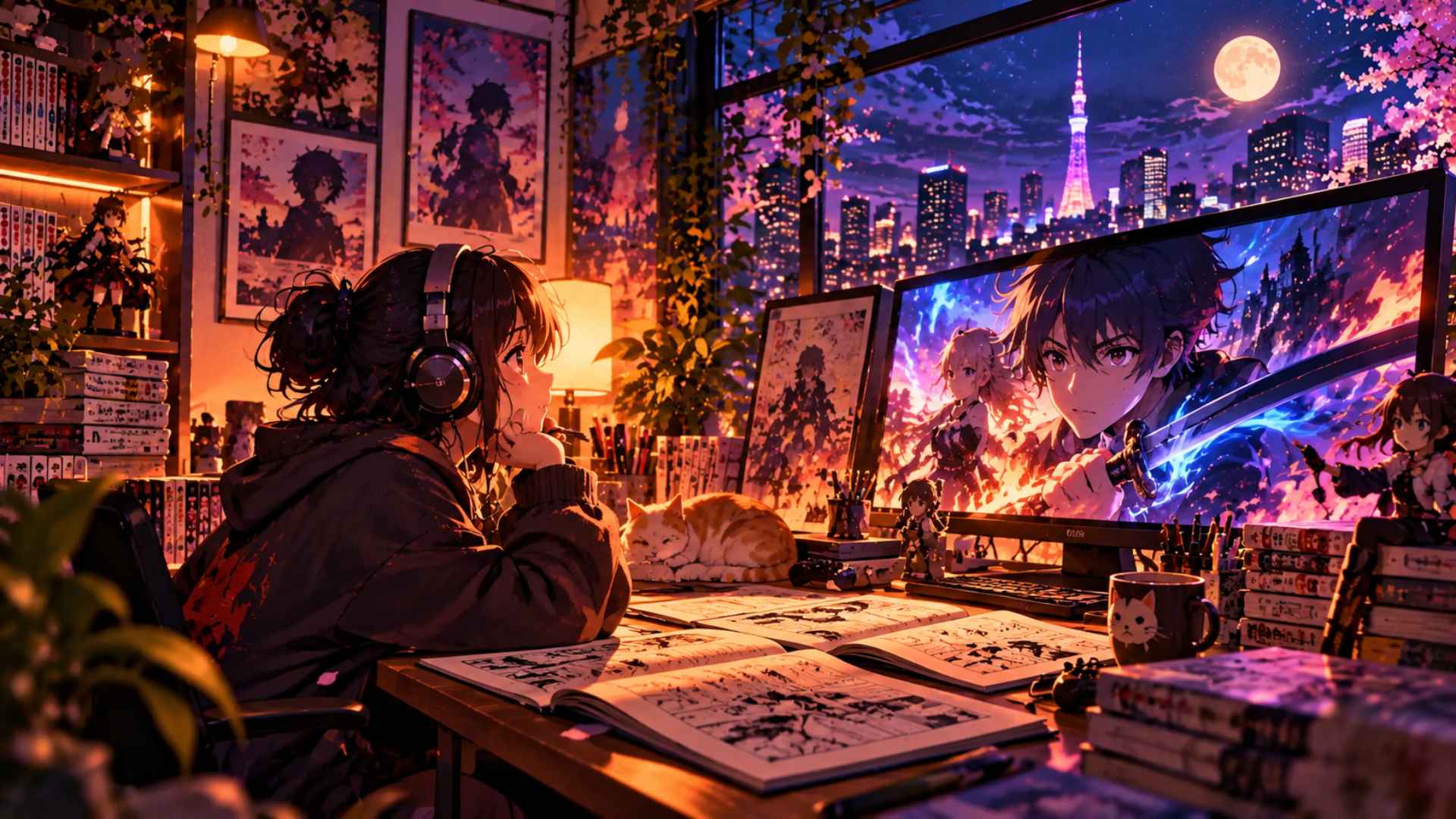
Manga and anime are closely connected forms of Japanese visual storytelling, but they use different creative methods to communicate narratives. Manga presents stories through illustrated panels, written dialogue, page composition, and the reader’s control over pacing. Anime transforms sequential artwork and written narratives into moving images accompanied by dialogue, music, and sound effects. Many internationally recognized anime franchises began as manga before receiving television or film adaptations. Understanding the differences between these formats helps explain why the same story can create different experiences for readers and viewers.
The relationship between manga and anime has produced numerous influential works across several decades. Dragon Ball, Naruto, One Piece, and Demon Slayer: Kimetsu no Yaiba are examples of franchises whose manga stories were adapted into animated productions. Each adaptation requires creative decisions about scene transitions, character movement, dialogue timing, and visual presentation. Although an anime may follow the original storyline closely, the production process inevitably changes how certain moments are presented. These differences make manga adaptations an important subject when examining the development of Japanese animation.
The Difference Between Manga Panels and Animated Scenes
Manga storytelling relies heavily on panel arrangement, page composition, and the relationship between illustrations. Artists can use large panels to emphasize dramatic moments or smaller sequences to suggest rapid action and changing expressions. Because manga readers determine how quickly they move through each page, the duration of individual moments is not fixed. A reader may spend several minutes examining a detailed illustration or move rapidly through a dialogue-heavy sequence. This flexibility allows manga creators to shape narrative rhythm without assigning a precise running time to every scene.
Anime requires a different approach because events unfold according to the timing established by the production. Directors and storyboard artists determine how long a shot remains visible, when the viewpoint changes, and how characters move within the frame. A confrontation that occupies only a few manga panels may become an extended animated sequence with additional movement and dialogue. Conversely, several pages of manga may be condensed into a short television scene to maintain narrative momentum. These adjustments do not necessarily change the central story, but they can influence how viewers experience tension, humor, or emotional developments.
How Episode Structure Influences Story Pacing
Television anime operates within production and broadcast formats that differ from the structure of serialized manga publications. Many seasonal anime productions use a single-cour format of approximately 12 or 13 episodes, while others extend across multiple cours or continue through long-running broadcasts. These episode structures create practical decisions about how much source material can be adapted within an available running time. Writers and directors must determine where episodes begin, how scenes transition, and which narrative moments provide suitable conclusions. As a result, an anime adaptation may rearrange certain events or adjust the amount of time devoted to supporting material.
Long-running manga adaptations face particular pacing challenges because an animated production may approach material that has not yet been completed in print. Historically, some television series addressed this situation by introducing anime-original episodes or extending existing scenes. Such approaches have appeared in major franchises, including parts of the Naruto television adaptations. Other productions are organized into separate seasons with breaks between installments, allowing more time for additional manga chapters to become available. Neither structure automatically determines storytelling quality, but each creates different opportunities and constraints for narrative development.
The Role of Animation, Color, and Sound
One of the most noticeable changes during adaptation is the introduction of continuous movement. Manga illustrations can suggest motion through speed lines, expressive poses, and the arrangement of consecutive panels. Animation adds timed movement, character performance, camera techniques, and transitions that communicate action differently. Key animators establish important poses and movements, while other production processes help create the progression between those images. The effectiveness of an animated scene depends on artistic direction, timing, composition, and the coordination of multiple production departments.
Color and sound also contribute elements that may not be specified in the same way within the original manga. Although manga can include color illustrations, many serialized chapters are primarily presented in black and white. Anime productions develop color schemes for characters, environments, lighting, and emotional atmosphere. Voice actors introduce spoken performances, while composers and sound teams create musical themes and effects that support the narrative. These elements can give familiar scenes new emotional qualities without fundamentally changing the events depicted in the source material.
When Anime Adaptations Follow Different Storylines
Not every anime adaptation reproduces its original manga from beginning to end. Some productions modify narrative events, introduce original material, change the ordering of scenes, or develop conclusions that differ from their source works. These differences may arise from the availability of source chapters, decisions about episode structure, or broader creative objectives. An adaptation can therefore function as a related interpretation rather than an exact audiovisual reproduction of the original publication. Comparing the versions requires attention to what each production attempts to accomplish within its format.
The Fullmetal Alchemist franchise offers a particularly clear example of different adaptation approaches. The first Fullmetal Alchemist television anime began broadcasting in 2003 while Hiromu Arakawa’s manga was still being serialized. Its narrative eventually developed along a substantially different path from the manga storyline. Fullmetal Alchemist: Brotherhood, which premiered in 2009, provided another television adaptation that followed the manga’s main narrative more closely. The existence of these two productions illustrates how a single original work can support distinct animated interpretations with different narrative structures and conclusions.
How Manga Readers and Anime Viewers Experience Characters
Character development is communicated differently when a story moves from illustrated pages to animated episodes. In manga, facial expressions, written dialogue, panel size, and visual emphasis help readers understand a character’s emotional state. Anime adds vocal delivery, timed pauses, movement, music, and scene composition to these existing storytelling tools. A quiet conversation may feel more intimate when accompanied by subtle animation and restrained sound design. An intense confrontation may become more dramatic through rapid editing, expressive movement, and changes in musical rhythm.
These differences can influence how audiences interpret character personalities and relationships. Dialogue that appears concise on a printed page may carry additional emotion when performed by a voice actor. Similarly, the timing of a comedic reaction can change when an animated scene determines exactly how long a pause should last. Manga readers may form their own expectations about voices, movement, and atmosphere before encountering an adaptation. Recognizing these different experiences allows comparisons to focus on storytelling methods instead of assuming that one format must always be superior.
Comparing Manga and Anime With Greater Context
A useful comparison between manga and anime begins with identifying the specific versions being examined. Some franchises contain multiple television adaptations, theatrical films, special episodes, and revised editions of their original publications. Release chronology is important because an animated work may have been produced before its source material reached a conclusion. Differences should therefore be considered alongside the production circumstances and narrative objectives of each version. This approach avoids treating every alteration as either an improvement or a mistake without examining its purpose.
Manga and anime can complement one another while offering distinct artistic experiences. The original manga provides access to its creator’s panel composition, illustrative choices, and published narrative structure. An anime adaptation introduces collaborative interpretation through direction, animation, color design, performance, editing, and sound. Examining both formats can reveal how creative decisions affect pacing, characterization, and emotional presentation. Rather than expecting complete uniformity between the two, audiences can appreciate how different forms of visual storytelling communicate related ideas through their own techniques.